
What Camera Equipment Do Professional Architectural Photographers Use?
Shooting high-end architecture and interior design is a highly specialized discipline. The gear required for professional editorial and commercial work is fundamentally different from what you might use for fast-paced real estate listings. Let’s take a look at what professional architectural photographers actually carry in their kit.
Camera Body and Lenses: Resolution and Straight Lines
While speed matters for sports photography, architectural work prioritizes resolution, dynamic range, and straight lines.
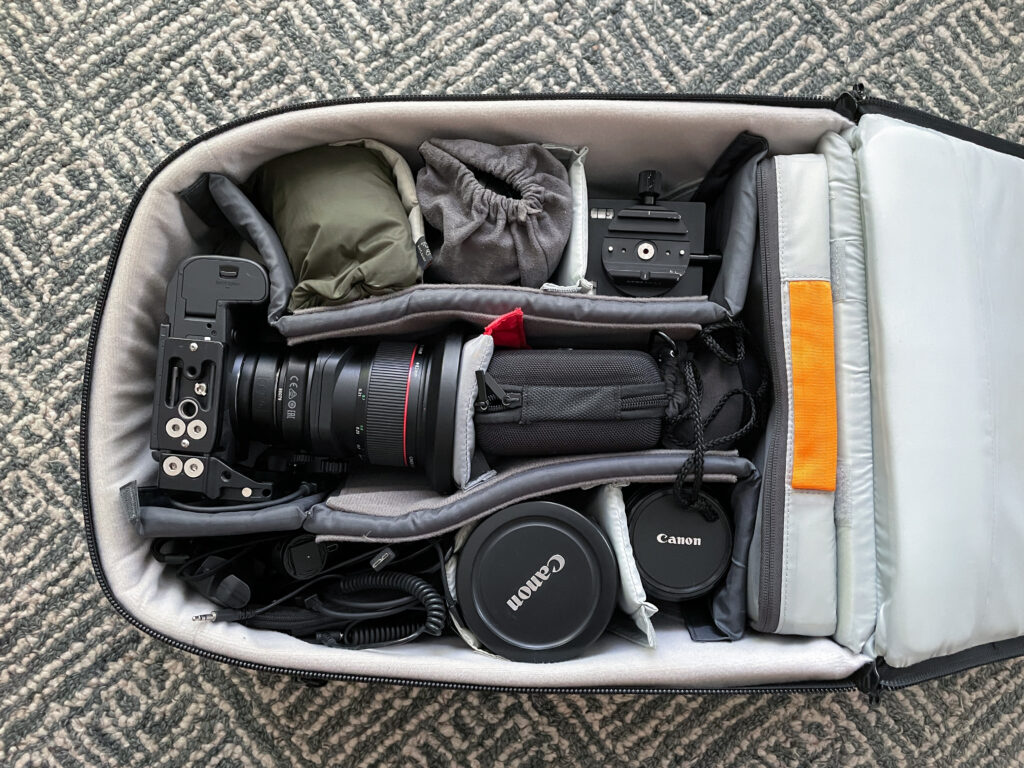
- Full-Frame Sensor: A large sensor (like the 45-megapixel Canon R5) is essential for capturing large dynamic range (bright window views and dark shadow areas in a single scene). It also provides the resolution required for large print work and cropping leeway in post-production. Photographers who shoot very high-end work for clients that need massive resolution may look into medium format cameras.
- Tilt-Shift Lenses: A dedicated 24mm tilt-shift lens (or a 30mm equivalent on medium format) is probably the most widely used in the industry. With more experience, photographers will add other tilt-shift lenses (17mm, 50mm, etc.) or prime lenses for detail vignettes. Correcting lines in software stretches the image and discards resolution, whereas a tilt-shift optically keeps vertical walls straight in-camera.
- Primes over Zooms: Prime lenses generally offer far superior corner-to-corner sharpness and less optical distortion than zoom lenses.
Support Systems and Tethering: Stability and Collaboration
Precision on set requires specialized support and viewing setups.
- Tripod: Buy the best one you can afford. It’s literally the foundation to the shot, and it’s essential that it doesn’t shake.
- Geared Tripod Heads: Hand-holding is impossible due to long exposures and multiple shots from the same place, used for compositing. High-end photographers prefer geared tripod heads over ball heads because they allow micro-adjustments on individual axes without slipping.
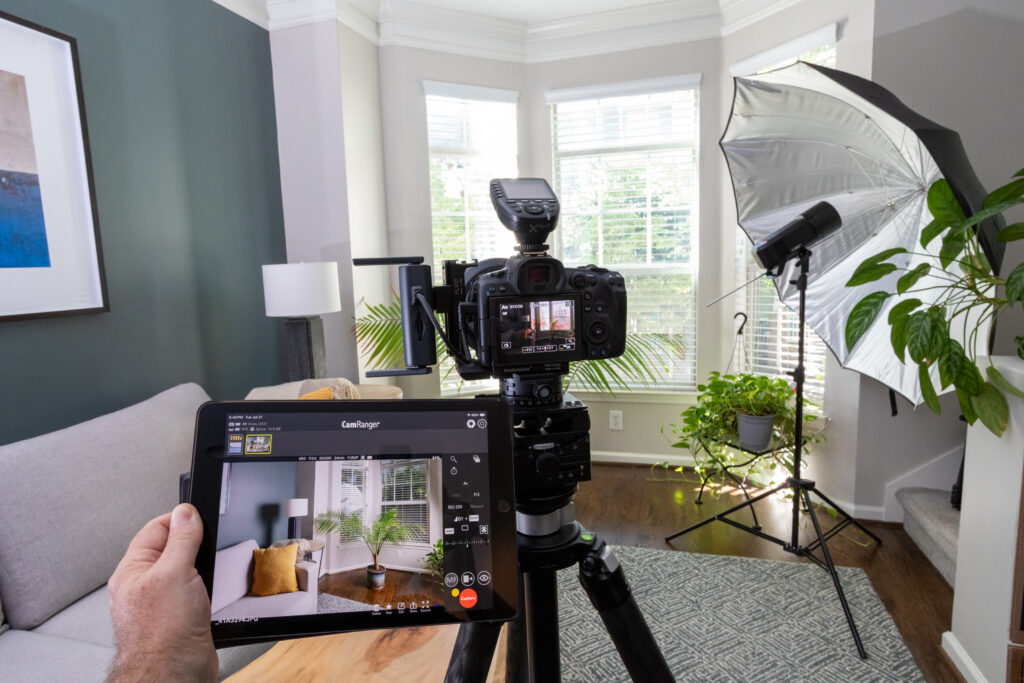
- Tethering Setups: Photographers tether directly to a laptop or wirelessly to a tablet using local Wi-Fi transmitters. This allows the photographer and client to view live previews, spot small staging issues, and trigger the shutter remotely.
Lighting, Grip, and Transport: Shaping the Environment
Controlling light requires both active flash work and specialized grip gear.
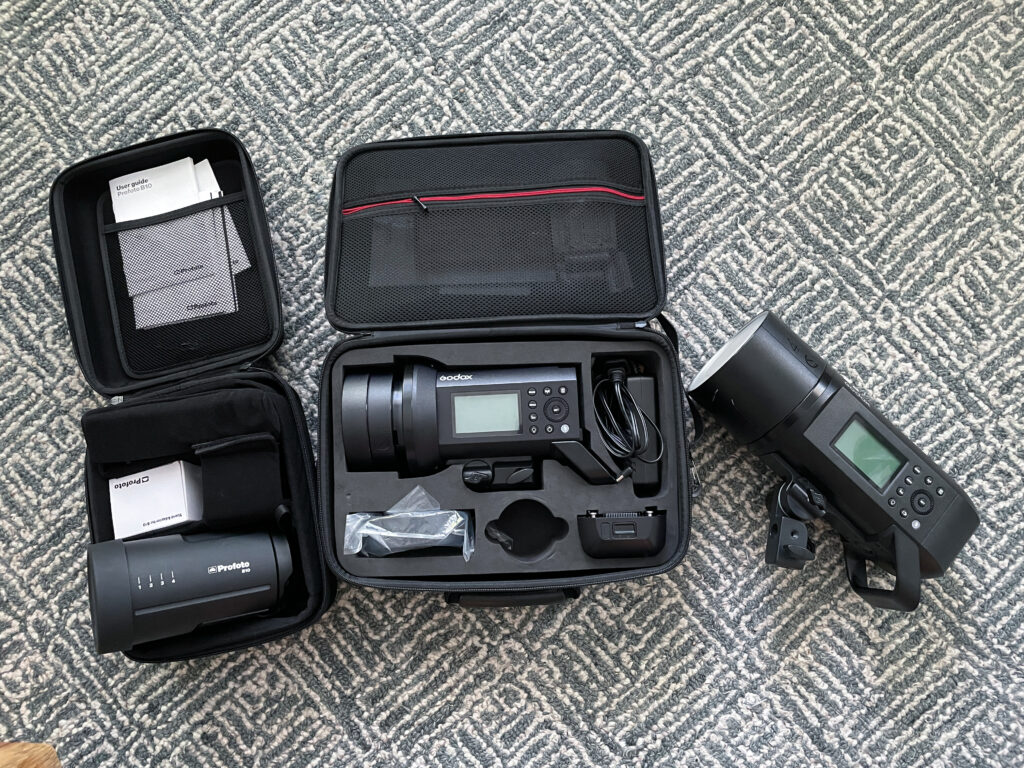
- Strobes and Modifiers: Photographers use off-camera studio strobes fired through umbrellas or large scrims to fill dark corners, highlight textures, and eliminate glass reflections. Even ambient-only photographers carry blackout cloth and bounce boards to shape natural light.
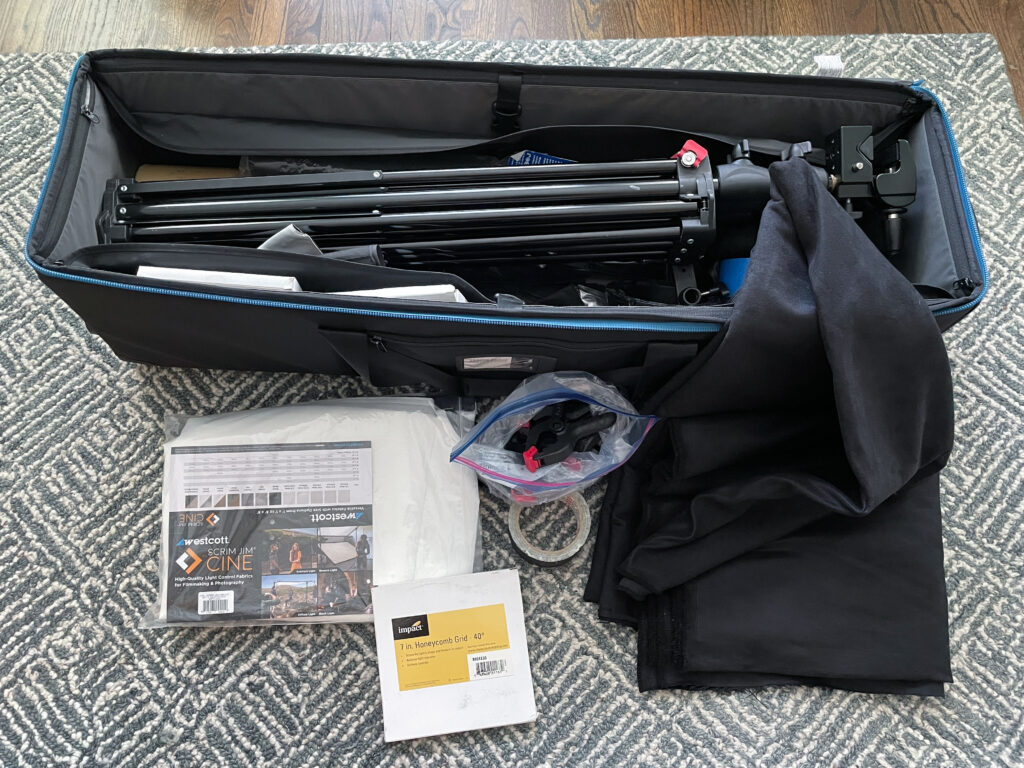
- Essential Grip Gear: A complete kit includes color gels to match flash temperatures to warm tungsten room lights, cinefoil (black foil) to block small lights or cover reflective exit signs, and small items like gaffer tape, clamps, and a multi-tool.
- Packing Logistics: For travel, gear is usually split across a carry-on camera bag, then checked protective strobe and drone cases and a large rolling grip case for heavy stands, tripods, and modifiers.
Where to Start on a Budget
If you are building a professional kit on a budget, invest in just three essentials: a full-frame camera, a sturdy tripod with a geared head, and one off-camera strobe with an umbrella. Mastering those three pieces will teach you the core foundation of architectural lighting.
[And one tip: If you are seeing older tutorials recommending continuous flashlights (like the Lowel GL1), skip them – modern bi-color LEDs and strobes have rendered them obsolete.]
If you’ve got any questions, contact me here!
To understand how all the gear fits into a typical day on location, see this blog post about what to expect during an architectural photography shoot.
And check out my home page for more info.